

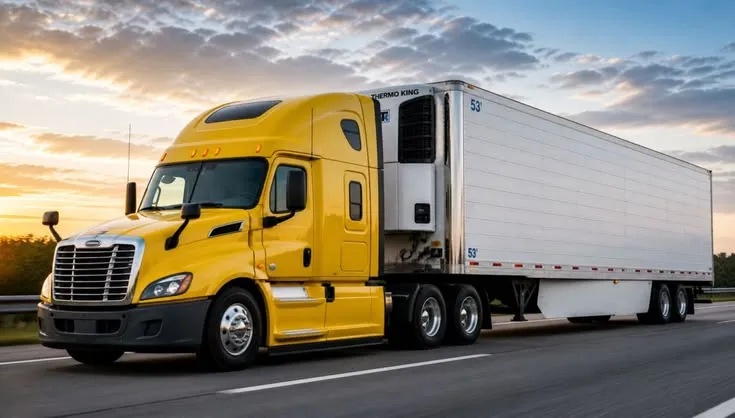
Trailers in Savannah can sometimes require extra tractor space to transport equipment from a warehouse to a distribution center and commercial facilities. With power-only transportation, a carrier provides the tractor and driver, and the other party provides the trailer. To help businesses plan equipment movement, scheduling, etc. To pick the best transport setup for your work, you must get how this system works first.
Understand Power Only Transportation
Power-only service that disconnects the tractor from the trailer. The tractor and driver are provided by the carrier, and the trailer could be owned by the shipper, the logistics company, the rental firm, or the owner.
This configuration may be used for loaded trailers, unloading and repositioning trailers. Can be beneficial for trailers owned by businesses and requiring extra tractor power for certain moves.
Companies should verify the trailer type, location, condition, and destination before scheduling transportation.
How Power Only Loads Work
Power only loads savannah can involve several types of trailer movements. A carrier may collect a loaded trailer from a warehouse, move an empty trailer to another facility, or reposition equipment for a future shipment.
Typically, the first step is to receive explicit instructions to pick up. Before the driver comes to work, the carrier should know the location and destination of the trailer, when the appointment is set for, and what equipment is required.
When a trailer is loaded with goods, businesses should also include basic details about the goods, such as weight, size, and delivery needs if there are any.
When Businesses May Use It
The use of power-only transportation can be beneficial when company trailers are available and are not supported by the number of tractors required to transport them. It may happen when a specific season is in effect, if you’re handling more shipments for a short time, or if you’re altering your warehouse procedures.
It can also help companies that frequently move trailers from one facility to another. Trailer ownership and capacity are separate entities that provide an alternate option when the company’s needs change.
Review Trailer Requirements
The business should ensure the trailer is ready to load and fits the tractor that will be used to load it. The location, connection requirements, condition and identification of trailers must be made clear prior to use.
Accurate freight information is also crucial if a trailer is loaded. The carrier needs to know some of the baseline needs of the movement before accepting the shipment.
Clear preparation = less confusion at pick-up and more information for the driver on arrival at the facility.
Plan Around Facility Schedules
Savannah companies can have manufacturing plants, distribution centers, and warehouses that have various access protocols. There are some places that need appointments and others that have designated hours to receive or pick up.
These requirements should be communicated prior to transportation. Proper schedule data enables the carrier to schedule movement and provides facility operators with a more precise idea of arrival time for equipment.
For repeat actions, companies can store basic instructions for frequently referenced locations. This can help to streamline subsequent bookings.
Evaluate Transportation Providers
When comparing power only trucking savannah options, businesses should consider geographic coverage, equipment experience, scheduling, communication, and service availability.
A provider should be aware of the kind of trailer that’s being transported and the destinations. Experience with similar movements and facilities and procedures is helpful in such movements.
Another aspect to take into account is how the shipment updates are delivered to the business. For any change in pick-up time or for further information, a simple contact process can be followed.
Consider Recurring Needs
For companies that have frequent trailer movements, consider more than one load. They can consider the frequency of equipment movement, the facilities involved and whether volumes will increase or decrease at specific times.
If a transportation agreement is to be repeated, it’s important to have clear directions and regular schedules. It’s easier to organize future movements if you take the time to review these requirements now.
Transportation should be re-evaluated if the business begins to expand the warehouse location, the amount of goods sent out, or changes the requirements of the customers.
Keep Documentation Organized
Only power movements might need the following: facility contacts, freight documentation, identification of the trailer, and pickup information and delivery information. These records can be more easily coordinated if kept organized.
A regular documentation process also facilitates shipping teams in giving accurate information in case of a similar movement in the future.
Conclusion
When businesses in Savannah have transportation equipment and require more tractor and driver capacity to move trailers, power-only transportation is the answer. With careful planning of the details of the trailer, schedules for the facility, freight information, communication, and provider capabilities, these movements can be better coordinated. Interested businesses looking at power-only transportation and other solutions for freight can visit ykfreight.com to learn more about their freight services that could be suitable for their operations.