

For decades, classrooms relied on chalkboards and later whiteboards as the backbone of teaching. Teachers stood at the front, wrote key points, and hoped students absorbed the lesson. While effective in its time, this method often lacked engagement and interactivity. Today, classrooms are evolving rapidly – and one innovation at the center of this transformation is the digital board for teaching.
This modern tool isn’t just about swapping chalk for screens. It’s about fundamentally changing how teachers deliver lessons, how students learn, and how schools prepare young minds for a digital future. If you’ve ever wondered what this shift looks like in action, take a look at a real example of a digital board for teaching that combines innovation with classroom practicality.
From Static to Interactive
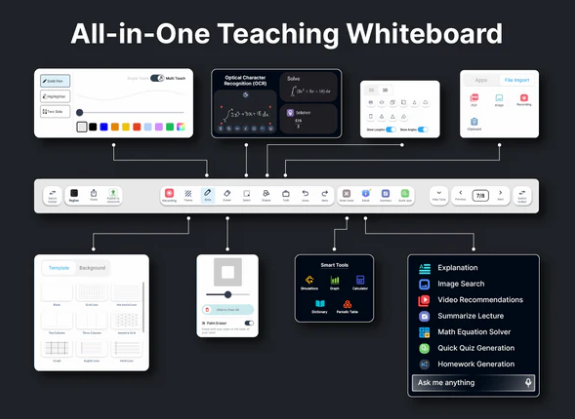
Traditional teaching relied heavily on lecture-based delivery. With digital boards, lessons are no longer static. They’re interactive, dynamic, and often immersive experiences. Teachers can:
- Annotate directly on slides, PDFs, and web pages.
- Play educational videos instantly to illustrate concepts.
- Use 3D models to bring complex subjects like biology or physics to life.
- Invite students to solve problems directly on the board.
This turns learning into a two-way process. Instead of passively listening, students actively participate, which not only improves comprehension but also retention.
How Teachers Benefit
The shift to digital boards isn’t just good for students – it’s a game changer for teachers too.
- Time efficiency: Teachers save valuable minutes by accessing lesson materials, videos, and notes from one device instead of juggling laptops, projectors, and markers.
- Better classroom management: With engaging visuals and tools, keeping students’ attention becomes easier.
- Personalization: Teachers can adapt lessons to the needs of different learners – whether that means slowing down, replaying a video, or adding real-time annotations.
- Stress reduction: Less technical hassle means teachers can focus on teaching, not fixing devices.
In short, digital boards make teachers not just instructors but facilitators of active learning.
Why Students Love It
Today’s students are digital natives. They’re used to smartphones, tablets, and interactive media. A plain whiteboard often feels outdated to them. With digital boards, lessons align with the way they already consume and process information.
- Visual learners grasp concepts faster with videos and diagrams.
- Kinesthetic learners engage better by touching, drawing, and interacting.
- Auditory learners benefit from multimedia content integrated into lessons.
The result? Higher student engagement, better performance, and classrooms filled with curiosity rather than boredom.
The Digital Board for Teaching Price Factor
One of the biggest questions schools ask is: “How much will it cost?” The digital board for teaching price varies depending on features, size, and brand. Schools often worry that it’s a luxury reserved for elite institutions. But that’s no longer true.
With EdTech companies focusing on accessibility, schools can now find cost-effective options that balance quality with affordability. For example, you can explore the digital board for teaching price of a trusted model that proves how practical this investment can be for schools of all sizes.
When evaluating cost, schools should consider:
- Durability: A board that lasts 7–10 years reduces long-term expenses.
- Low maintenance: Unlike projectors that need frequent bulb changes, digital boards run efficiently.
- Value for learning: The impact on students often far outweighs the initial price.
Real-World Classroom Transformations
Let’s imagine how digital boards change specific subjects:
- Mathematics: Instead of solving equations line by line, teachers use graphing tools to visualize functions instantly.
- Science: A chemistry reaction is shown as a video rather than described with words alone.
- Geography: Teachers zoom into maps, explore satellite imagery, and even compare global climate data.
- Languages: Interactive storybooks and real-time quizzes keep learners engaged.
These practical applications show why digital boards are not just gadgets – they’re modern education tools.
Breaking Barriers in Education
Another powerful aspect of digital boards is their role in inclusivity. They bridge gaps for students who might otherwise struggle.
- Special education support: Interactive visuals help students with learning challenges.
- Remote learning: Boards with cloud integration allow lessons to be saved and shared with absent students.
- Collaboration: Students can brainstorm together, creating a culture of teamwork.
In this way, digital boards aren’t just changing teaching – they’re making education more collaborative technology-driven and accessible.
What the Future Holds
The adoption of digital boards is only the beginning. As software evolves, features like AI-driven lesson recommendations, real-time student performance tracking, and even multilingual translation will become standard. Teachers will be equipped with data-driven insights, allowing them to adapt lessons on the spot for better outcomes.
And as the cost continues to fall, these innovations won’t remain limited to urban or premium schools. Rural and semi-urban institutions will also gain access, ensuring no student is left behind in the digital revolution.
How Schools Can Decide
When considering adoption, schools should weigh:
- Size of classrooms – Larger rooms may require a 75-inch display.
- Curriculum demands – Heavy multimedia subjects need stronger tech.
- Teacher readiness – Ensure training programs are in place.
- Long-term planning – Think beyond today’s needs; choose scalable solutions.
Making an informed decision ensures the school gets maximum benefit without overspending.
Final Thoughts
The way teachers deliver lessons has changed forever. A digital board for teaching is not just a replacement for chalk and duster – it’s a gateway to smarter, more engaging, and inclusive learning. It empowers teachers, excites students, and prepares schools for a digital-first future.
Yes, price matters. But when you balance cost against the long-term benefits – student performance, teacher satisfaction, and reduced maintenance – the value becomes undeniable. Schools that embrace this shift aren’t just investing in technology; they’re investing in generations of learners who will carry forward the skills of tomorrow.
The classroom is no longer confined to a board and a marker. With digital boards, it becomes a space where knowledge is experienced, not just taught. And that’s the real change in the way teachers deliver lessons.