

Flexibility is Key to the Speed and consistency of application delivery. The pace and nature of modern software development necessitate flexibility and, more importantly, consistency. As most development projects employ a variety of programming languages, frameworks, database technologies, and even different operating systems, maintaining a consistent working environment across developers becomes an issue. When projects get complex, locally managing different dev stacks begins eating away at the valuable time of development.
This is where a virtual machine has transformed the development process. Developers can use isolated computers from only one piece of physical equipment, and virtual machines can make life easier. In test environments, virtual machines are a very useful development to make use of. They are very handy with the job of writing and implementing software in a much higher capacity.
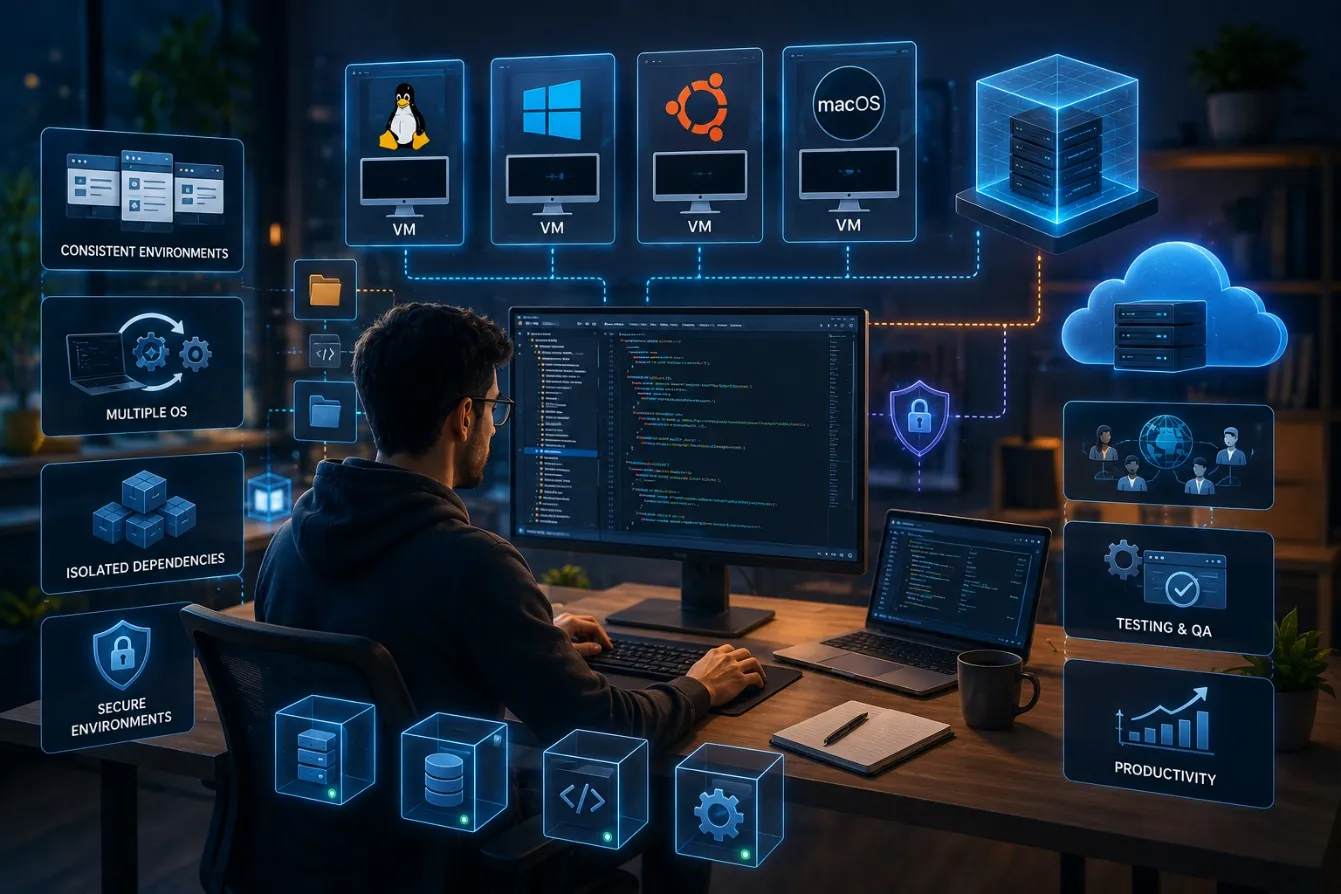
Building Consistent Development Environments
One of the most common problems developers face is environment inconsistency. An application may work perfectly on one machine but fail on another due to differences in software versions, operating systems, or configurations.
A virtual machine helps eliminate this issue by creating a standardized environment that can be replicated across multiple systems. Every developer can use the same setup, ensuring consistent behavior throughout the development lifecycle.
This reduces troubleshooting time and allows teams to focus more on writing code and less on resolving configuration conflicts.
Running Multiple Operating Systems on One Device
Developers often need to test applications on different operating systems before deployment. Purchasing and maintaining separate hardware for each operating system can be expensive and impractical.
With a virtual machine, multiple operating systems can run simultaneously on a single computer. A Linux and other environments running on Windows could be done without changing the hardware and can be easily installed by a user of Windows OS.
This flexibility simplifies cross-platform development and allows teams to verify compatibility before releasing software to users.
Isolating Project Dependencies
Libraries, frameworks, or even programming languages require specific versions for individual projects. All these should not be installed directly to the machine. Doing so can lead to conflicts that will affect the speed or the general performance.
A virtual machine provides isolated environments where each project can maintain its own dependencies without interfering with others. Developers can experiment all they want without fear of damaging their current applications.
This obviously takes out the burden of multiple projects, and it is very smooth to flow through all your projects.
Simplifying Software Testing
Testing is a critical stage of software development. They have to be tested in varied conditions for any potential bugs, compatibility errors, and performance shortcomings.
Virtual machines allow developers to create dedicated testing environments that closely resemble production systems. This way, teams may securely run the latest updates, deploy new software, and verify settings without impacting users of the main work machines.
Using a virtual machine for testing helps improve software quality while reducing deployment risks.
Supporting Remote Development Teams
The growth of remote work has increased the need for consistent development environments. Team members often work from different locations using different hardware configurations.
When you provide access to an identical environment, your team can unify the development process. With that, new employees no longer waste hours setting up a system before they can start adding value to the project.
This improves collaboration, accelerates onboarding, and helps distributed teams remain productive.
Enabling Safe Experimentation
There often arises the need for developers to test new systems, updates, software, or framework changes. However, changing anything on the primary development machine may prove unstable.
A virtual machine offers a safe space for experimentation. Developers use this to experiment with tools, new applications, or change system settings and test apps, while they don’t need to test their main environment.
If something goes wrong, the virtual machine can simply be restored or recreated, making experimentation far less risky.
Improving Security During Development
Given that modern development often includes third-party packages and even open source software, the risks to developers remain prevalent – even experimental applications bring with them risks.
By creating an isolated environment, a virtual machine helps contain potential risks. Any issues that arise remain within the virtual environment rather than affecting the host operating system.
This allows developers the flexibility and ease to test new software and technology with added security.
Preparing Applications for Cloud Deployment
Many modern applications are being launched on cloud environments. Virtual machines give developers the ability to recreate production infrastructure so problems can be diagnosed and resolved before launch.
Teams who test configurations and workloads in a virtual machine will be able to increase how ready their deployment is and how sure they are that they won’t encounter problems down the line.
The above-mentioned compatibility between local development and production environments aids smooth software releases.
Increasing Productivity and Flexibility
Perhaps the greatest impact of the virtual machine is the flexibility it provides developers. Developers are no longer confined to one operating system or one hardware. They can set up many environments for different projects.
Creating web apps, testing updates or patches for the software, running a database or experimenting with emerging technologies-all of these tasks are made easier and more flexible with the use of Virtual Machines.
Conclusion
The virtual machine has fundamentally changed how developers work locally by providing flexible, isolated, and reproducible environments. Whether it be running different operating systems, managing dependencies, streamlining testing processes, or enabling remote collaboration, virtual machines can significantly ease the problems encountered by today’s day-to-day software development.
As development workflows continue to evolve, the need for reliable and scalable local environments will only grow. For modern-day developers in need of more speed, consistency, and self-control over their work, a virtual machine continues to be one of their most vital resources.