
Introduction
A skid steer snow plow is one of the most practical attachments for handling winter cleanup quickly, safely, and efficiently. Whether you manage a driveway, parking lot, commercial plaza, residential compound, or municipal road, snow can slow work, block access, and create safety risks. Instead of relying only on manual shoveling or larger machines, a skid steer fitted with a snow plow gives you strong pushing power in a compact and maneuverable setup.
For operators who already use a skid steer loader, adding a snow plow attachment can turn the machine into a dependable winter maintenance tool. A hydraulic model also makes operation easier because blade angle adjustments can be controlled without leaving the seat.
Skid Steer Snow Plow Overview
A skid steer snow plow is an attachment designed to mount on the front of a skid steer loader and push snow away from roads, yards, lots, and working areas. It works like a snow blade, but the skid steer gives it better control, traction, and pushing strength compared with smaller snow-clearing tools.
The main reason this attachment matters is productivity. During winter, snow buildup can delay deliveries, block customer access, damage site schedules, and increase slip hazards. A hydraulic snow plow attachment helps operators clear larger areas with less physical effort and better control.
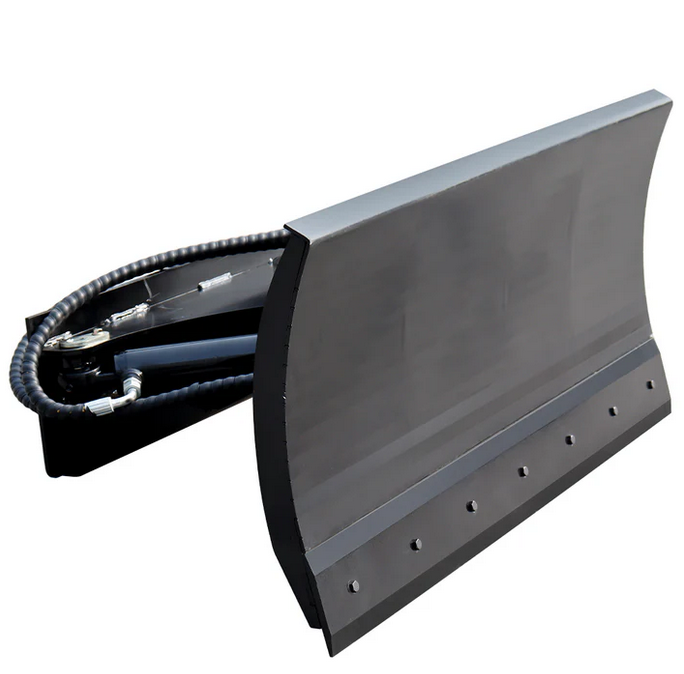
The MMS hydraulic skid steer snow plow is listed with 30-degree left and right angle adjustment, a universal mount for MMS mini skid steer loaders, free U.S. shipping, a 1-year warranty, and lifetime technical support. For buyers comparing snow removal tools, details are available at https://www.mmsce.com/products/mms-hydraulic-skid-steer-snow-plow-30-left-right-for-mms-skid-steer-loader
Key Features and Options of a Skid Steer Snow Plow
When choosing a skid steer snow plow, the right features can make a major difference in speed, safety, and ease of use. Not every snow plow attachment is built the same, so operators should compare blade control, mounting style, build quality, and machine compatibility.
Hydraulic Angle Adjustment
A hydraulic snow plow attachment allows the blade to angle left or right from the operator’s seat. This is useful when clearing long paths, pushing snow to one side, or working around buildings and parked vehicles. A 30-degree snow plow angle gives better directional control than a fixed straight blade.
Strong Snow Blade Design
The snow blade should be wide and durable enough to handle repeated pushing. A well-built skid steer snow blade can move snow across driveways, yards, parking areas, and commercial spaces without requiring constant repositioning.
Universal or Compatible Mounting
Attachment compatibility is one of the most important buying points. The MMS model is described as having a universal mount suitable for MMS mini skid steer loaders, with connection dimensions shown in the product images. Always check your loader’s plate size and hydraulic connection before ordering.
Practical Use Areas
A skid steer snow plow can be used in:
- Residential driveways
- Apartment compounds
- Commercial parking lots
- Municipal roads
- Industrial yards
- Farm lanes
- Warehouse entrances
For operators looking for a compact winter clearing solution, this product page provides a useful reference: https://www.mmsce.com/products/ms20-2-tons-mini-excavator-kubota-diesel-engine-hydraulic-pilot-excavator
Benefits of Using a Skid Steer Snow Plow
The biggest benefit of a skid steer snow plow is time savings. Snow removal can be slow and physically demanding when done with basic tools. A skid steer attachment turns the job into a faster machine-powered process, helping you clear more ground with less labor.
It also improves site safety. Snow and ice buildup around homes, parking lots, and work areas can lead to blocked paths and accidents. By clearing snow early and consistently, property owners and operators can keep access routes open and reduce winter hazards.
Another advantage is machine versatility. If you already own a skid steer loader, a snow removal attachment increases the value of your machine during the winter season. Instead of leaving the loader unused in cold months, you can use it for plowing, site maintenance, and emergency clearing.
Hydraulic control also adds comfort. Operators do not need to stop repeatedly to manually reposition the blade, which helps maintain workflow in freezing conditions.
How to Choose the Right Skid Steer Snow Plow
Choosing the right skid steer snow plow should be based on your machine, work environment, and snow-clearing needs. A low-cost attachment is not always the best option if it does not fit properly or lacks the control needed for your job.
1. Check Loader Compatibility
Start with your skid steer model. Confirm that the mounting plate, hydraulic flow, and attachment size match your machine. For a mini skid steer snow plow, fitment is especially important because compact loaders need properly sized attachments.
2. Look at Blade Angle Control
If you need to push snow to the side, choose a hydraulic angle model. A blade that angles left and right helps clear lanes faster and reduces the need for repeated passes.
3. Match the Plow to Your Work Area
For tight spaces, choose a plow that is easy to control and not too oversized for the machine. For wider open areas, a larger blade may improve productivity.
4. Review Warranty and Support
Winter attachments work in tough conditions, so after-sales support matters. MMS lists this snow plow with a 1-year warranty and lifetime technical support. 5. Consider Transport and Delivery
Free shipping or pickup availability can reduce total buying costs. MMS also notes free U.S. shipping and pickup availability at warehouses on the product page.
Expert Tips and Best Practices
To get the best performance from your skid steer snow plow, start with proper setup. Before the first snowfall, inspect the attachment, mounting plate, pins, hydraulic lines, and cutting edge. A few minutes of checking can prevent delays during urgent snow removal work.
When plowing, avoid pushing too much snow in one pass. Heavy snow can overload the machine, reduce traction, and make steering harder. It is better to make controlled passes and direct snow toward open storage areas.
Plan your plowing route before starting. Clear main entrances first, then work toward secondary paths, corners, and edges. For parking lots, push snow away from drains, doors, and high-traffic walkways.
Also, adjust your blade angle based on the surface. A hydraulic skid steer snow blade works best when the operator uses smooth movements instead of sudden impacts. This protects the attachment, the loader, and the surface being cleared.
Conclusion
A skid steer snow plow is a smart investment for faster, easier, and more reliable winter snow removal. It helps operators clear roads, compounds, lots, and work areas with better control than manual tools. Features like hydraulic 30-degree left and right adjustment, compatible mounting, and strong blade design can make a major difference in daily performance.